

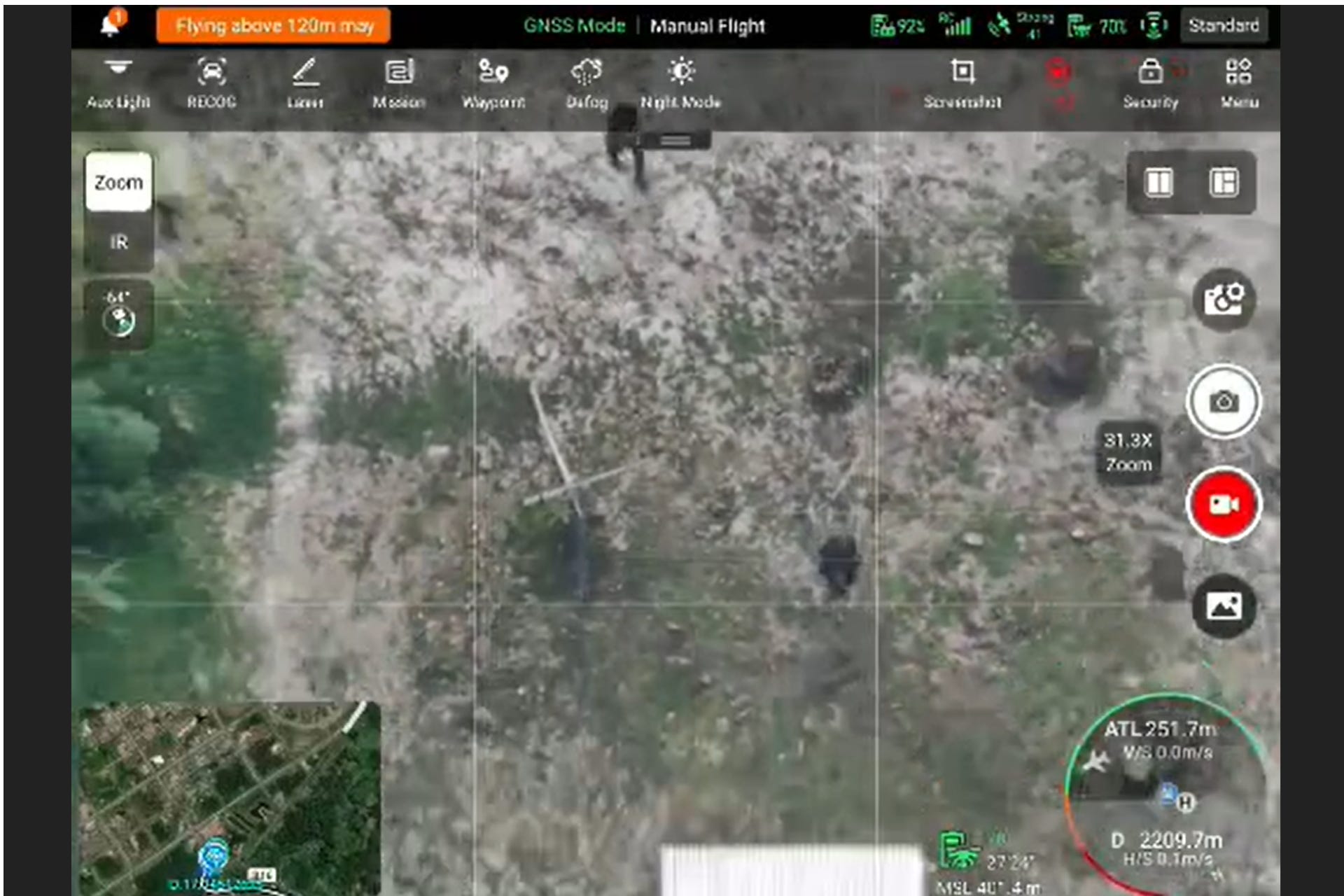
Recently released drone footage shows the Indonesian occupying army surveilling Papuan civilians near the village of Nonggoloit in Kenyam district of Ndguga regency in West Papua on 23 October 2026. The group of around eight men appear unaware of the lethal device hovering in the sky. And after the 5-minute-long footage cuts out, two of these men were shot dead by Jakarta.
Indonesian forces, or the Tentara Nasional Indonesia (TNI), claim that the two men shot dead and the six subsequently arrested in a ground operation were separatists from the Organisasi Papua Merdeka (OPM). However, the United Liberation Movement for West Papua (ULMWP) has identified them as civilians: specifically 16-year-old Helkia Kerebia and Masut Serera, who was aged 25.
The aerial drone footage looks just like other scenes the global community has become all too used to emerging out of the Gaza Strip. The clip is eerily similar to footage which has involved genocidal Israeli Defence Forces monitoring Palestinian civilians from the sky, right before the IDF guns down innocents simply because they’re the peoples whose lands they’re violently usurping.
The TNI started targeting villages in the highland region of Nduga in late 2018. Since that time, Indonesian forces have continued this crackdown into Intan Jaya and Yahukimo regencies. More than 127,000 West Papuan villagers have been displaced. The ULMWP is warning that it considers these operations are now moving into Paniai regency in the same hilly terrain.
The concerns about Indonesian military expansion in the Melanesian highland region further comes as the TNI announced the creation of five new infantry battalions to be deployed to “vulnerable areas in Papua” earlier this month. And while Jakarta claims this is to assist in the prosperity of the local people, it’s too occurring as the largest deforestation project on the planet is well underway.
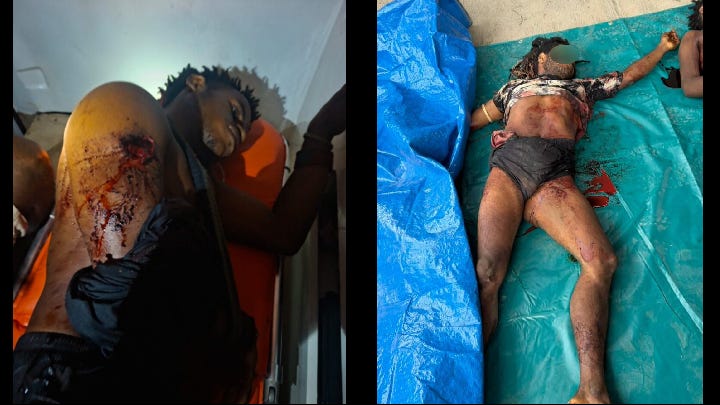
Military assaults in the highlands
“West Papua is already the most militarised zone in the Asia-Pacific region, with over 100,000 security forces based there – one for every twenty Papuans,” ULMWP interim president Benny Wenda said in a 28 October 2026 statement.
“But even with 127,000 Papuan civilians displaced by military operations, and with more than seventy civilians killed by the army so far this year, Indonesia still bars NGOs, foreign journalists and even the UN Human Rights High Commissioner from entering West Papua.”
“World leaders must ask themselves: what is Indonesia hiding in West Papua?” Wenda continued. “Why is Indonesia permitted to hold the presidency of the UN Human Rights Council, while violating the will of a clear majority of UN members?”
The attacks in the West Papuan highlands commenced in 2018, under the Jokowi government. Yet, these attacks have distinctly picked up ever since notorious former TNI general Prabowo Subianto was installed as Indonesia’s president in October 2024. Indeed, the Suharto-era general has long had a reputation for having been a ruthless war criminal in occupied East Timor and West Papua.
Prabowo has been a critic of the Israeli-perpetrated Gaza genocide, during his time in office. Yet, this has not meant that he’s taken a lighter approach to Indonesia’s slow genocide in West Papua, which Jakarta has been progressing since 1963. If anything, Prabowo has taken advantage of the new liberal approach to mass murder globally to heighten the violence in the Melanesian region.
“On behalf of the ULMWP and West Papuan people, I call for increased pressure to force Indonesia to open West Papua to the eyes of the world,” Wenda further asserted last week. “Indonesia must face serious diplomatic consequences until the UN High Commissioner is finally allowed access.”
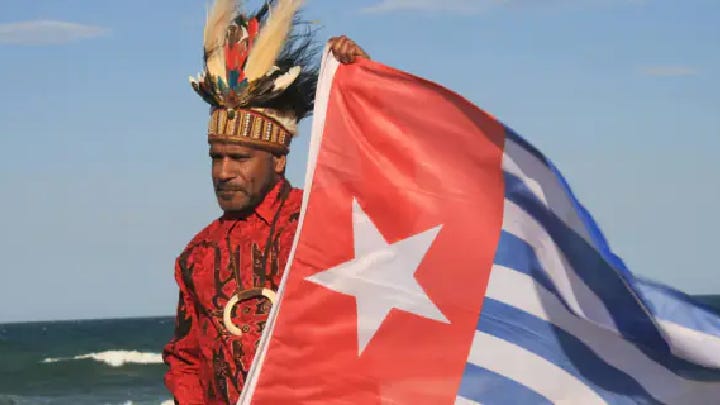
Sixty years of occupation
The Netherlands colonisers vacated Indonesia in 1949, but then exited West Papua in 1962, which was when the New York Agreement was struck. This arrangement comprised of Indonesia taking over administration of the Melanesian region, following a brief period of United Nations oversight, on the proviso that Jakarta allowed the West Papuans to later hold a referendum on self-determination.
This then led to the 1969 UN-brokered Act of Free Choice. But this so-called referendum was no free vote at all, as what occurred was the Indonesian military rounded up 1,026 West Papuan men, and at gunpoint, this small group voted against West Papuan self-determination, which rather led to an outcome that called for the ongoing rule of Jakarta.
Around 500,000 Papuans have been killed by Indonesian forces over the last 60 years. The region has been split into six separate Indonesian provinces. A 1970s established transmigration program sees Papuans making up less than 50 percent of the local population. Prabowo has reinvigorated this program of late. And the massive Freeport cooper mine has been operating in the region since 1972.
The West Papuan People’s Petition calling for a new internationally supervised self-determination referendum comprises of 1.8 million signatures, or 70 percent of the Indigenous population, and it was presented to the UN in 2019. A provisional West Papuan government has been established on the ground in the region, with 12 government departments, and Wenda is interim president.
Most devastatingly at present, the Prabowo government has embarked upon the Merauke Integrated Food and Energy Estate Megaproject, which, located in South Papua province, is the largest deforestation project anywhere, and it produces palm oil, rice, sugar cane and other products. So, this project sees Jakarta taking the Trumpian approach of cashing in as the climate is collapsing.
Rising support down under
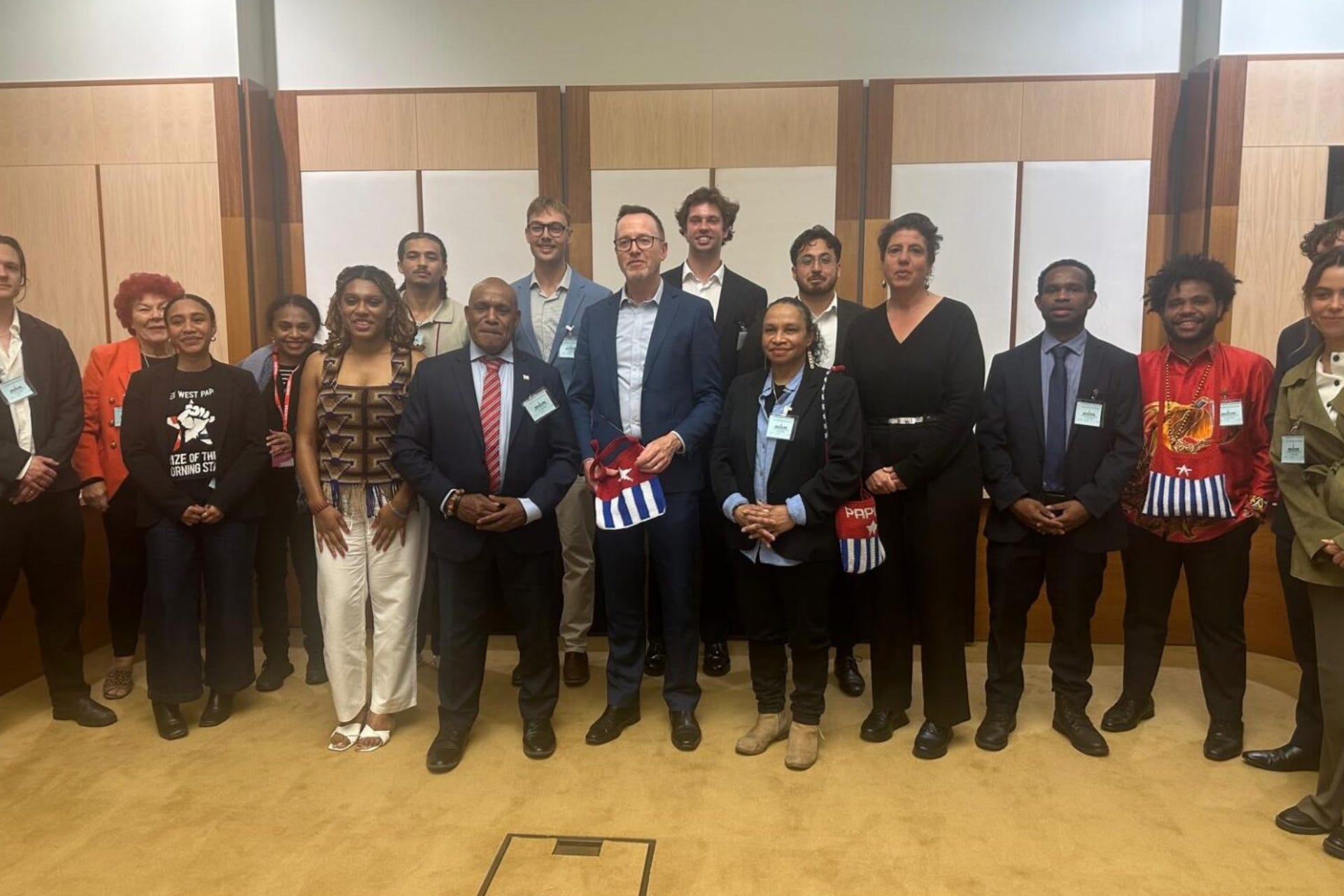
Australian Greens Senator David Shoebridge hosted a delegation of West Papuans in his office on Ngunnawal and Ngambri land in Australian Parliament House on 17 August 2026. This was for the inaugural meeting of the Australian chapter of International Parliamentarians for West Papua. theunadulterated was shocked to find this was only the first such delegation to visit Canberra.
Wenda and members of the delegation from Naarm-Melbourne told the now Australian Greens leader and members of the Labor party and the Coalition about the plight of their people under six decades of Indonesian rule. And they further discussed the devastation of the Merauke Megaproject, which has been detailed in the recent documentary Pig Feast: Colonialism in Our Time.
The first meeting of the International Parliamentarians for West Papua at Australian parliament was an attempt to put this issue on the political agenda in this country, as for the last sixty years successive Australian governments have sent high level ministers to Jakarta to court their Indonesian counterparts, whilst remaining completely silent on the West Papuan situation.
“When you hear directly from West Papuans who have experienced military violence, dispossession and ecocide, and you realise that this is a human rights crisis literally on Australia’s doorstep, it’s hard to explain the decades of silence,” Shoebridge said in late August 2026.
“This is trying to break through those walls of silence, so that the Australia parliament and the Australian people can show solidarity with the struggle in West Papua,” the Greens leader added.
All images supplied by United Liberation Movement for West Papua